234 Total courses
Explore a variety of fresh topics

Scan/Click here to download
our course list
Tap here to know more about
Upcoming batches/course schedule
Explore a variety of fresh topics
Scan/Click here to download
our course list
Upcoming batches/course schedule
Created by - Elite Offshore Pvt Ltd
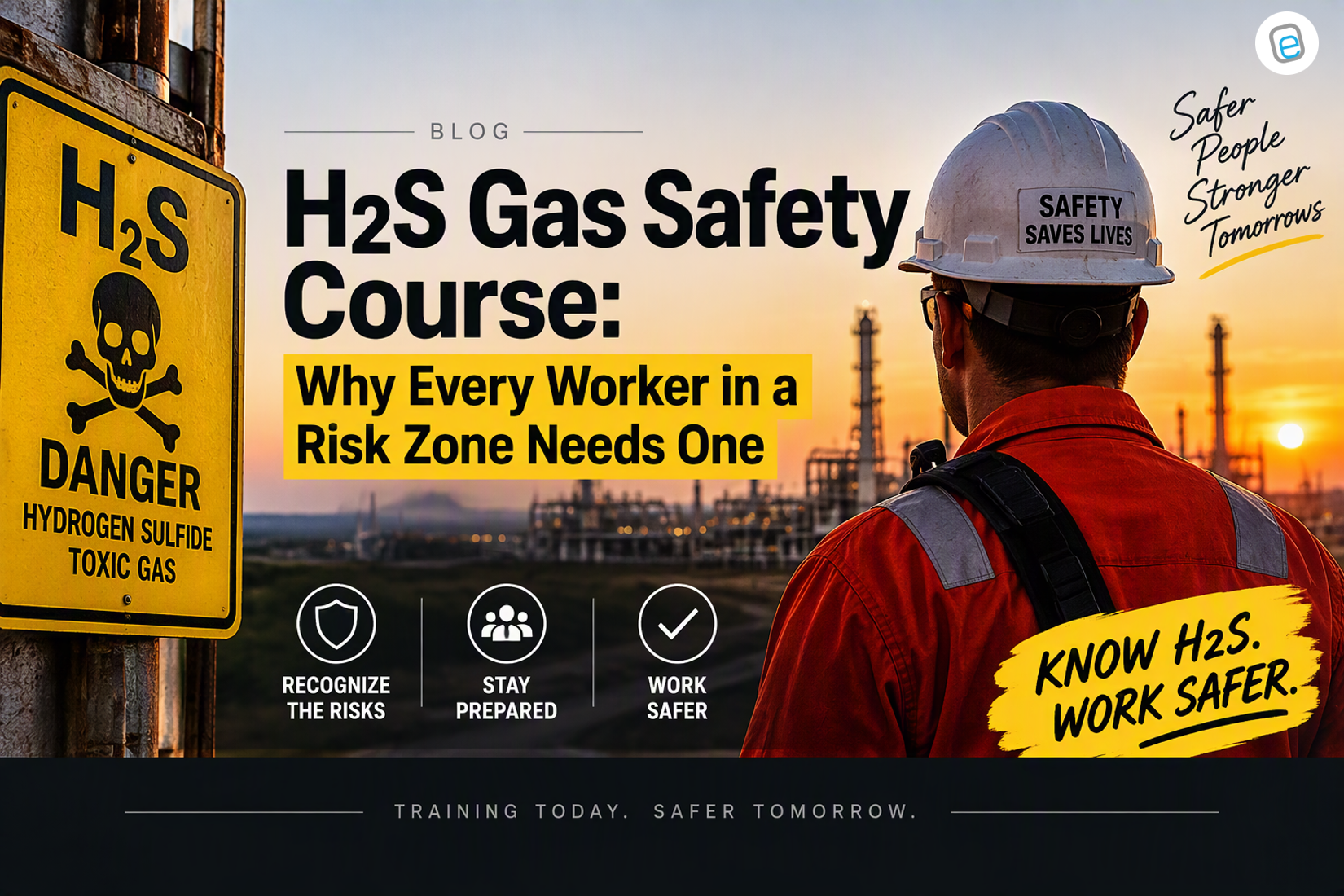
You Can't See It, and Soon You Can't Smell It EitherAsk anyone who has worked on a rig, in a refinery or around a sewer line about hydrogen sulphide, and you'll usually get a quiet pause before the answer. H2S is one of those hazards that people in the industry respect, because it doesn't give you much of a warning.At low levels, it smells like rotten eggs. That sounds like a built-in alarm, but it isn't. At higher concentrations, the gas dulls your sense of smell, so the odour seems to disappear just when the danger is rising. People have walked deeper into a space thinking "the smell is gone, so it must be fine." It's one of the most dangerous misunderstandings in industrial safety.That is why a proper H2S gas safety course isn't a box to tick. It is training that teaches you to trust your equipment and your procedures instead of your nose.What Exactly Is Hydrogen Sulphide?Hydrogen sulphide (H2S) is a colourless, toxic and flammable gas. It forms when organic material breaks down without oxygen, and it also occurs naturally in crude oil and natural gas. That is why you'll find it in: Offshore platforms and drilling rigs Land rigs and oilfields Refineries and petrochemical plants Wastewater and sewage treatment plants Drains, manholes, tanks and confined spaces It's also heavier than air. So it doesn't float away. It settles in low-lying areas, pits, tanks and enclosed spaces, which are exactly the places workers are sent to inspect or clean.You may also hear it called sewer gas, stink damp or sour gas. Different names, same hazard.Why H2S Training Matters So MuchExposure limits for H2S are measured in parts per million (ppm), tiny amounts. Low concentrations can irritate your eyes and throat. Higher ones can cause headaches, dizziness and breathing trouble. At very high concentrations, a person can collapse within moments. Exact exposure limits vary by regulator and country, and a good course teaches you how they're defined and why some people are affected more than others.The risk doesn't end with the first victim, either. Many incidents get worse because a coworker rushes in to help without protection. Training teaches you the harder but safer lesson: raise the alarm, protect yourself first, then help.What You Learn in Elite Offshore's H2S (Hydrogen Sulphide Gas Safety) CourseAt Elite Offshore Pvt Ltd, we built this course for people who actually work around H2S, not just for those who want a certificate. Over 8 hours of theory and practical exercises, you'll cover: How H2S forms and where it's found, including the other names used for it Its properties: odour, density and flammability Understanding ppm and what the numbers on your detector actually mean Occupational exposure limits and the factors that make one person more sensitive than another Types of H2S detectors and respiratory protection equipment Pre-use checks on personal detectors and escape breathing apparatus (EBA) Operating a personal H2S detector, including functional checks and what to do when it alarms Donning an escape breathing apparatus with both mask and hood, correctly and within 30 seconds Connecting to and disconnecting from a pressurised cascade breathing system safely Responding to alarms and emergencies while looking after yourself and the people around you The equipment covered includes H2S detectors, SCBA sets, ELSA escape sets and cascade breathing systems, depending on the training scope.The 30-second donning drill is the part many people remember. It's one thing to read about an escape set, and quite another to get it on, sealed and working while an alarm is sounding. We make sure you can do it without fumbling.Who Should Take This Course?This H2S safety training is a good fit if you work in or are heading into: Offshore oil and gas Land rigs and drilling operations Refineries and petrochemical plants Wastewater and sewage treatment facilities Municipal work such as drainage and manhole cleaning Any workplace where H2S might be present If you're planning to build a career offshore, this is one of those certificates that employers often expect to see, so doing it early can save you a scramble later.Who Can Enrol? (The Requirements) You should generally be at least 18 years old. You should be able to read and understand the course material and instructions. A medical check may be required to confirm you're fit to use breathing apparatus. Depending on the training format, you may be asked to bring your own PPE. No previous H2S experience is needed. Basic workplace safety awareness helps, but we start from the fundamentals. Online or Classroom: Your Choice Not everyone can take time off to sit in a classroom, especially offshore professionals and international students juggling different time zones. So the course is available both online and offline, with 6 months of access listed on the course page. Whether you're in Mumbai or on the other side of the world, you can learn at a pace that works for you.Frequently Asked QuestionsWhat is an H2S safety course? It teaches you to recognise hydrogen sulphide hazards, understand how the gas affects the body, detect it with the right equipment, and respond safely in an emergency.Who should take an H2S safety course? Anyone working offshore, on land rigs, in refineries, petrochemical plants or wastewater facilities, and anyone whose job could expose them to H2S.Do I need any previous experience? No. The course builds essential H2S awareness and response skills from the ground up.Does the course include practical training? Yes. You'll work with H2S detection equipment and relevant breathing and escape equipment, including EBA, SCBA and cascade breathing systems, where included in the training scope.How long is the H2S course, and how long is the certificate valid? The course is 8 hours long, and the certificate is valid for 2 years.Can international students take it online? Yes. Offshore professionals and international students can take the course online from anywhere.Is it useful for offshore jobs? Very much so. It's particularly relevant for offshore oil and gas personnel who may work where hydrogen sulphide could be encountered.A Few Honest Words Before You GoH2S incidents rarely happen because someone didn't care. They happen because someone didn't recognise the signs in time, or didn't know exactly what to do in those first thirty seconds. Good training closes that gap.If you work around this gas, or are about to, take the course before you need it.Ready to get certified? Enrol in the H2S (Hydrogen Sulphide Gas Safety) Course here: https://eliteoffshore.in/home/course/h2s-hydrogen-sulphide-gas-safety-course/13 Questions? Reach the Elite Offshore team at training@eliteoffshore.in or call +91-22-4970-4933. You can also browse our other courses such as BOSIET and HOIT.
More detailsPublished - 6 Days Ago

Created by - Elite Offshore Pvt Ltd
Workplace safety involves more than understanding rules and procedures. Employees also need to know how to identify hazards, use safety equipment correctly, and follow safe working practices.For companies in the offshore, marine, oil and gas, construction, logistics and industrial sectors, practical safety training helps employees understand how safety procedures are applied in real working situations.Benefits of Practical Safety TrainingPractical training gives employees opportunities to learn through demonstrations, supervised exercises and relevant workplace scenarios. Depending on the course, training may cover:Hazard identification and risk awarenessFire safety and emergency responseConfined Space Entry and Confined Space RescueForklift operation and material handlingRigging, slinging and scaffolding safetyOffshore and marine safety trainingThe right course depends on employees' job responsibilities, workplace risks and applicable training requirements.Why Arrange Safety Training for Company Teams?When multiple employees require the same training, a company batch can help simplify training coordination and scheduling.HR managers, HSE managers and training coordinators can discuss the required courses, number of participants, preferred dates and practical training arrangements. Training should be selected according to the team's actual responsibilities and any applicable competency or certification requirements.Practical Safety Training at Vindhane, Navi MumbaiElite Offshore Pvt Ltd offers offshore, marine and industrial training programmes. Companies can enquire about suitable practical training options at our Vindhane Practical Training Centre.Training Centre Address:Plot 61/9/2, Vindhane, PO Dighode, Taluka Uran, Navi Mumbai – 410206, Maharashtra.Companies can discuss available programmes, batch size, course duration, practical requirements and scheduling with our team.Enquire About Company Batch TrainingAre you planning safety training for your employees?Contact Elite Offshore Pvt Ltd to discuss your company's training requirements and suitable batch arrangements.Website: www.eliteoffshore.inCourses: Explore our training programmesPhone: +91 80974 72277Office: +91 22 4970 4933Email: info@eliteoffshore.in | training@eliteoffshore.inContact us with your required course, number of participants, and preferred dates to discuss training options for your team.
More detailsPublished - Mon, 12 Oct 2026
Created by - Elite Offshore Pvt Ltd
Every week, our team receives questions from candidates preparing to start their IADC RigPass training. Many of these questions involve common misunderstandings about what RigPass covers, how the programme is delivered, and what the certificate means. Understanding these points can help candidates choose the appropriate training and avoid assuming that one certificate covers requirements that may be separate. Here are some of the most common mistakes and misconceptions about IADC RigPass. Mistake 1: Assuming RigPass Is a Single, Fixed Course IADC RigPass is a standardized safety orientation programme for oil and gas operations, both onshore and offshore. The IADC accreditation system identifies the core elements of safety orientation programmes and provides a means of recognizing programmes that meet those requirements. Accredited training providers may develop and use their own training activities to customize the programme, while still meeting the applicable IADC requirements. RigPass programmes can also include applicable onshore/land or offshore endorsement content. This is why it is important to choose a training provider whose RigPass programme is accredited by IADC. IADC maintains a list of accredited RigPass providers and provides a facility for verifying IADC certificates. Mistake 2: Confusing RigPass with H2S Training or WellSharp RigPass is a general safety orientation programme designed to prepare personnel for oil and gas operating environments. It is not the same as H2S Awareness training or WellSharp. H2S training focuses specifically on the hazards and safe working practices associated with hydrogen sulphide, while WellSharp is an IADC well-control training and assessment programme. Depending on the employer, position and worksite, candidates may be required to complete additional training or certifications. Always check the specific requirements for the role rather than assuming that one certificate covers every requirement. Mistake 3: Thinking Onshore and Offshore Content Are the Same RigPass has a common safety orientation component, but applicable land/onshore and offshore endorsements address the different operating environments. Offshore operations can involve additional safety considerations associated with marine operations, helicopter transportation, personnel transfer and water-related hazards. Land/onshore operations have different considerations, including hazards associated with excavation, trenches, pits and ponds. If you are preparing for an offshore position, make sure you understand which endorsement your RigPass programme is qualified to issue. IADC-accredited providers may be qualified to issue the Land/Onshore Endorsement, Offshore Endorsement, or both, depending on their accreditation. Mistake 4: Believing eLearning Certification Is Less Valid Than Classroom Training The delivery method does not by itself determine whether a RigPass programme is accredited. What is important is that the programme is delivered under an applicable IADC accreditation. IADC's current list of accredited RigPass providers includes programmes delivered through eLearning, demonstrating that electronic delivery can be used by appropriately accredited programmes. However, candidates should always verify that the specific provider and programme are currently accredited and qualified to issue the applicable endorsement. Mistake 5: Assuming RigPass Certification Has an Expiry Date One of the most common misconceptions is that an IADC RigPass student certificate needs to be renewed after a fixed period. Important Fact According to IADC, student certificates do not expire. This is different from IADC RigPass instructor certificates, which expire after five years. Therefore, once a student successfully completes an accredited RigPass programme and receives an IADC Certificate of Completion, the student certificate does not have an expiry date or routine renewal requirement. Mistake 6: Assuming RigPass Guarantees a Job Completing RigPass does not guarantee employment. IADC describes RigPass as a standardized safety orientation programme intended to prepare personnel for oil and gas operating environments and to confirm that personnel have met basic safety-orientation requirements defined by safety and training professionals in the drilling industry. RigPass is therefore a safety orientation credential, not a job placement programme, employment guarantee or technical/trade qualification. Employers may have additional requirements based on the position, worksite and specific responsibilities. Mistake 7: Skipping Knowledge Assessment Preparation Because RigPass is a safety orientation programme, candidates should take the knowledge assessment seriously. IADC's accreditation procedures require completion of the HSE RigPass orientation to be documented through a knowledge assessment. The procedures specify a minimum passing score of 80%. If a trainee does not pass, one reassessment must be made available. If the trainee does not pass the reassessment, the trainee must attend the full course again and pass the assessment to achieve certification. Candidates should therefore review the course material carefully rather than simply clicking through the eLearning modules without understanding the content. Mistake 8: Not Verifying the Provider's Accreditation Status Not every course using the name "RigPass" should automatically be assumed to be an IADC-accredited programme. IADC maintains an official list of accredited RigPass training providers. It also provides a system for verifying IADC Certificates of Completion. Before enrolling, candidates should verify the provider's accreditation status and confirm that the provider is qualified to issue the endorsement required for their intended work environment. IADC RigPass Training at Elite Offshore Pvt. Ltd. Elite Offshore Pvt. Ltd. is listed by IADC as an Accredited Commercial Training Program and is qualified to issue the Onshore and Offshore Endorsement. IADC's current listing shows the programme as being delivered in English. Candidates completing an accredited IADC RigPass programme receive an IADC Certificate of Completion upon successfully meeting the applicable requirements. IADC states that student certificates do not expire. Interested in IADC RigPass training? Contact Elite Offshore Pvt. Ltd. for course information and enrolment details. Frequently Asked Questions Does IADC RigPass certification expire? No. According to IADC, student certificates do not expire. IADC RigPass instructor certificates are subject to a five-year expiry period, but this does not apply to student certificates. Is IADC RigPass eLearning valid? IADC-accredited RigPass programmes can be delivered through electronic learning where the programme and provider meet the applicable IADC accreditation requirements. IADC's current accredited-provider listing includes RigPass programmes delivered through eLearning. Candidates should verify the accreditation status of the specific provider and programme before enrolling. Is IADC RigPass the same as H2S or WellSharp training? No. RigPass is a standardized safety orientation programme, while H2S training and WellSharp address different training requirements. Depending on the job and employer, additional training may be required. Does RigPass guarantee a job on a rig? No. RigPass confirms completion of an accredited safety orientation programme; it does not guarantee employment. Employers may have additional training, certification, experience and competency requirements for specific positions. What is the passing score for the RigPass knowledge assessment? IADC's accreditation procedures specify a minimum passing score of 80% for the knowledge assessment. One reassessment must be made available if the trainee does not pass the initial assessment. Information source: IADC RigPass accreditation information, IADC RigPass curriculum and accreditation procedures. Requirements and accreditation status should always be verified against the current IADC information before enrolment. ``` .iadc-rigpass-blog { width: 100%; margin: 0; padding: 20px 24px 50px 0; font-family: "Poppins", "Segoe UI", Arial, sans-serif; color: #263238; line-height: 1.75; font-size: 16px; box-sizing: border-box; } .iadc-rigpass-blog * { box-sizing: border-box; } .iadc-rigpass-blog h1 { font-size: 36px; line-height: 1.25; font-weight: 700; color: #0b3d6e; margin: 0 0 18px; letter-spacing: -0.3px; text-align: left; } .iadc-rigpass-blog h2 { font-size: 25px; line-height: 1.35; font-weight: 700; color: #0b3d6e; margin: 45px 0 16px; padding-bottom: 8px; border-bottom: 2px solid #dbe8f3; text-align: left; } .iadc-rigpass-blog h3 { font-size: 20px; line-height: 1.45; font-weight: 700; color: #164f7d; margin: 30px 0 10px; text-align: left; } .iadc-rigpass-blog p { margin: 0 0 18px; text-align: left; } .iadc-rigpass-blog strong { color: #173f63; font-weight: 700; } .iadc-rigpass-blog .intro { font-size: 17px; line-height: 1.8; color: #455a64; margin-bottom: 30px; text-align: left; } .iadc-rigpass-blog .mistake { margin: 0 0 34px; padding: 24px 26px; background: #f7fafc; border-left: 4px solid #1976b9; border-radius: 0 8px 8px 0; } .iadc-rigpass-blog .mistake h3 { margin-top: 0; margin-bottom: 12px; } .iadc-rigpass-blog .key-fact { margin: 28px 0; padding: 22px 25px; background: #eef7fc; border: 1px solid #c9e2f1; border-radius: 8px; } .iadc-rigpass-blog .key-fact-title { font-size: 18px; font-weight: 700; color: #0b3d6e; margin-bottom: 8px; } .iadc-rigpass-blog .elite-section { margin-top: 45px; padding: 28px 30px; background: #f4f8fb; border: 1px solid #d7e5ef; border-radius: 10px; } .iadc-rigpass-blog .elite-section h2 { margin-top: 0; border-bottom: none; padding-bottom: 0; } .iadc-rigpass-blog .cta { margin-top: 25px; padding: 18px 22px; background: #0b3d6e; color: #ffffff; border-radius: 8px; font-size: 17px; line-height: 1.6; } .iadc-rigpass-blog .cta strong { color: #ffffff; } .iadc-rigpass-blog .faq { margin: 0 0 18px; padding: 20px 24px; border: 1px solid #dce6ed; border-radius: 8px; background: #ffffff; } .iadc-rigpass-blog .faq h3 { margin: 0 0 9px; font-size: 18px; color: #0b3d6e; } .iadc-rigpass-blog .faq p { margin-bottom: 0; } .iadc-rigpass-blog .source-note { margin-top: 35px; padding-top: 18px; border-top: 1px solid #dce6ed; font-size: 13px; line-height: 1.6; color: #687780; text-align: left; } .iadc-rigpass-blog a { color: #1269a8; text-decoration: underline; } .iadc-rigpass-blog a:hover { color: #0b3d6e; } @media (max-width: 768px) { .iadc-rigpass-blog { padding: 15px 18px 40px 0; font-size: 15.5px; line-height: 1.7; } .iadc-rigpass-blog h1 { font-size: 29px; } .iadc-rigpass-blog h2 { font-size: 22px; margin-top: 36px; } .iadc-rigpass-blog h3 { font-size: 18px; } .iadc-rigpass-blog .intro { font-size: 16px; } .iadc-rigpass-blog .mistake, .iadc-rigpass-blog .elite-section { padding: 20px; } .iadc-rigpass-blog .faq { padding: 18px 20px; } } @media (max-width: 480px) { .iadc-rigpass-blog { padding: 12px 15px 35px 0; font-size: 15px; } .iadc-rigpass-blog h1 { font-size: 25px; } .iadc-rigpass-blog h2 { font-size: 20px; } .iadc-rigpass-blog .mistake, .iadc-rigpass-blog .elite-section, .iadc-rigpass-blog .faq, .iadc-rigpass-blog .key-fact { padding: 17px; } }
More detailsPublished - Wed, 23 Sep 2026
Created by - Elite Offshore Pvt Ltd
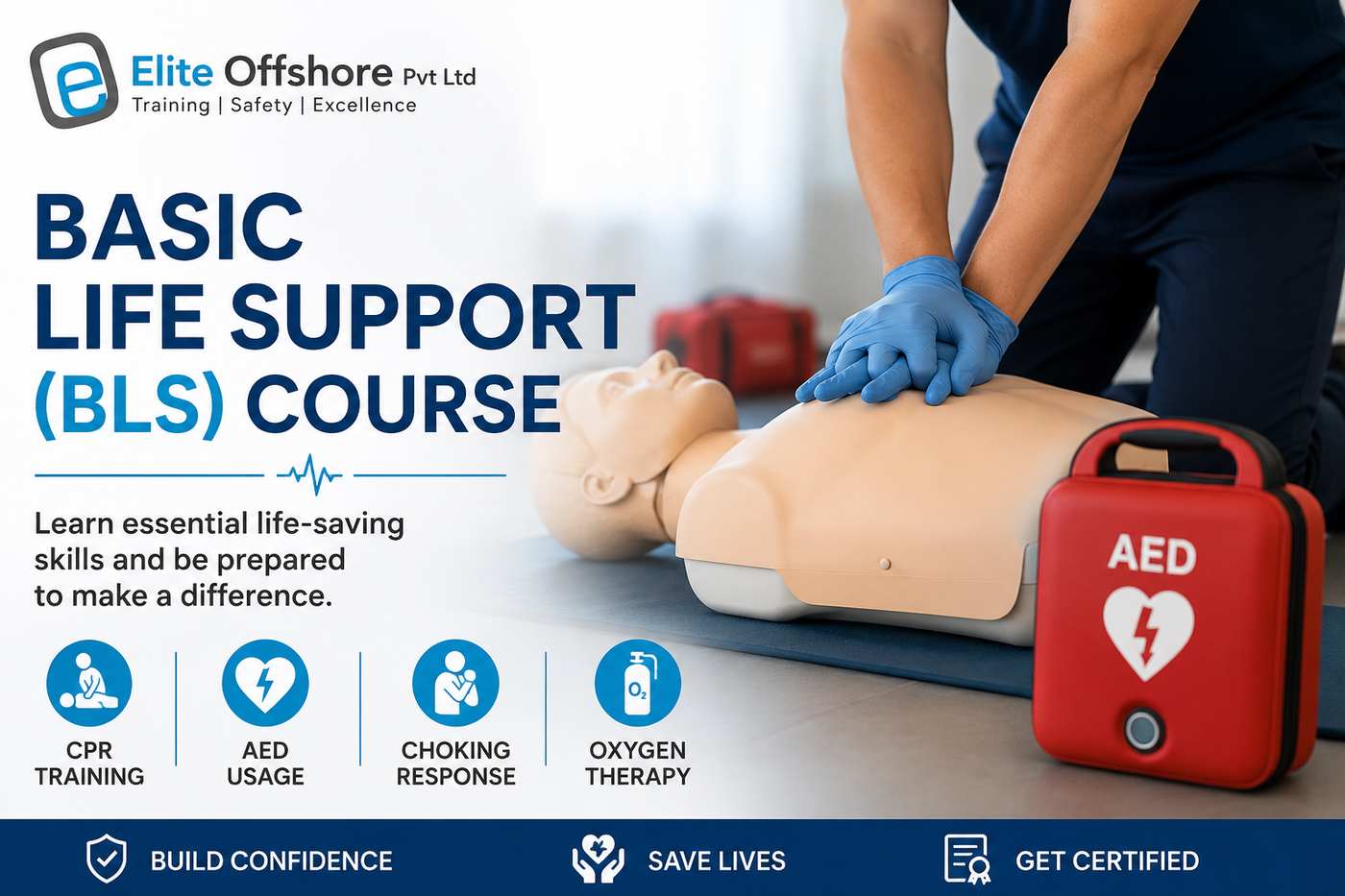
A medical emergency can happen anywhere. A person may suddenly collapse at work, stop breathing, suffer cardiac arrest, or choke while eating. In such situations, waiting for professional medical help is often not the only thing that can be done. The people who are already at the scene may be able to provide important support during those first few minutes.This is where Basic Life Support (BLS) training becomes important.A basic life support course teaches participants how to recognize a life-threatening emergency, assess the situation, raise the alarm, and provide immediate assistance until professional medical help takes over. The training focuses on practical skills such as CPR, AED use, basic airway management, and responding to choking emergencies.At Elite Offshore Pvt. Ltd., the Basic Life Support course is designed to help participants develop the knowledge and confidence required to respond to medical emergencies in a calm and organized way. The course is particularly useful for healthcare workers, safety personnel, workplace responders, and others who may have responsibilities involving emergency response.What Is Basic Life Support?Basic Life Support is the immediate care provided to a person experiencing a serious medical emergency, particularly when normal breathing or circulation is compromised.The purpose is to support vital functions until trained medical professionals arrive and take over the patient's care.A BLS response can involve:Recognizing cardiac and breathing emergenciesPerforming cardiopulmonary resuscitation (CPR)Using an Automated External Defibrillator (AED)Managing choking situationsSupporting basic airway managementAssessing the condition of a casualtyCalling for appropriate medical assistanceCoordinating with other people at the sceneProviding immediate support while waiting for professional assistanceThe important point is that BLS is not about replacing doctors, nurses or paramedics. It is about knowing what to do during the critical period before professional medical care becomes available.Why Basic Life Support Training MattersEmergencies rarely happen at a convenient time. A worker may collapse during a shift, a visitor may experience a medical emergency at a workplace, or someone may suffer a breathing problem in a public environment.In these moments, confusion can make it difficult to act.Basic life support training gives participants a structured approach to emergencies. Instead of simply knowing that CPR exists, learners are introduced to the steps involved in recognizing an emergency, getting help, and providing immediate support.For workplaces, this knowledge can become an important part of overall emergency preparedness.For individuals, it provides practical life-saving skills that may be useful at work, at home or in the community.CPR Training Is an Important Part of BLSCPR is one of the most widely known emergency-response techniques, but knowing about CPR and being trained to perform it are two different things.Through CPR training, participants learn the importance of responding quickly when a person experiences a life-threatening cardiac or breathing emergency.The BLS course at Elite Offshore introduces participants to CPR procedures and practical considerations associated with resuscitation. The course information also includes CPR for adults, children, and infants, along with chest compressions and rescue-breathing principles.Practical learning is particularly important because emergency situations can be stressful. Training helps participants become more familiar with the process so that they can respond in a more organized manner when required.Understanding AED UsageAn Automated External Defibrillator, commonly called an AED, is an important piece of emergency equipment used during certain cardiac emergencies.However, having an AED available is only part of emergency preparedness. People responsible for workplace or public safety should also understand how the equipment is used and how it fits into an emergency response.The BLS programme includes AED usage, helping participants understand the role of an AED during sudden cardiac arrest and how it can be incorporated into the emergency-response process.Learning CPR alongside AED operation is useful because both skills form an important part of responding to certain life-threatening cardiac emergencies.Responding to Choking EmergenciesChoking can happen unexpectedly and may quickly become a serious emergency.A person may be unable to breathe properly because the airway has become blocked. Recognizing the signs and responding appropriately can therefore be extremely important.The basic life support training at Elite Offshore includes choking response and basic life-saving techniques. Participants are introduced to the importance of assessing the situation and providing appropriate assistance while professional medical help is being arranged.This is one reason BLS training can be useful beyond hospitals and healthcare settings.`Basic Airway Management and Breathing Emergencies.Maintaining an open airway is an important consideration when responding to an unconscious or seriously ill casualty.The BLS course introduces participants to basic airway-management concepts, breathing emergencies, and the significance of breathing barriers. The course information also covers bag-valve-mask considerations and two-rescuer CPR.These topics help learners understand that emergency response is not limited to chest compressions alone. A proper response involves assessing the casualty, recognizing the type of emergency, and following an appropriate sequence of actions.BLS Course in Navi MumbaiFor people looking for a BLS course in Navi Mumbai, choosing training that combines clear instruction with practical learning can make a meaningful difference.Navi Mumbai and the wider Mumbai region have a large workforce connected with healthcare, industrial operations, marine activities, logistics, construction and other workplaces where emergency preparedness is important.Elite Offshore Pvt. Ltd. provides safety and professional training for people working across offshore, marine and industrial environments. Its BLS programme is suitable for people who may need to respond to a medical emergency as part of their professional responsibilities.If you are searching for a basic life support course near Navi Mumbai, it is worth checking the current course schedule, delivery format, eligibility requirements and certification arrangements directly with the training provider before registering.Basic Life Support Training in Mumbai for Workplace SafetyA workplace does not necessarily need to be a hospital for medical emergencies to occur.Offices, factories, workshops, construction sites, warehouses, ships, offshore facilities and other workplaces all have people who may suddenly require assistance.This makes basic life support training in Mumbai relevant for a wide range of professionals.Employees who receive emergency response training can become better prepared to:Recognize an emergencyRaise an alarm quicklyContact appropriate medical assistanceBegin CPR when requiredUse an AED when appropriateRespond to choking emergenciesSupport a casualty while waiting for professional helpCommunicate important information to emergency respondersBLS should always be viewed as part of a broader emergency preparedness system rather than a replacement for professional medical treatment.Who Can Benefit From a BLS Course?BLS knowledge is not limited to one profession.The course can be useful for:Doctors and nursesParamedics and healthcare workersSafety officersWorkplace emergency respondersTeachers and school staffLifeguardsCaregiversIndustrial workersSupervisorsPeople responsible for workplace safetyCommunity members interested in emergency preparednessThe Elite Offshore course information states that no previous medical training is required, although participants should be physically capable of performing CPR and understand the language of instruction.BLS Certification and Professional DevelopmentMany people search for basic life support certification because they want documented evidence that they have completed relevant training.A BLS certification can be useful for professionals whose workplace responsibilities require knowledge of emergency response. However, the exact recognition and validity of any certification can depend on the employer, industry, regulator or organization requesting it.For this reason, candidates should always confirm the specific certification requirements applicable to their job before booking a course.Elite Offshore Pvt. Ltd. provides information about the course, training arrangements and certification as part of its programme. Participants should check the latest course details directly with the institute because training requirements and arrangements can change.BLS and First Aid: Are They the Same?BLS and first aid are related, but they are not exactly the same.First aid training generally covers a broader range of immediate care situations, including injuries, wounds, burns, bleeding and other common emergencies.BLS places greater emphasis on life-threatening emergencies involving breathing, circulation and cardiac arrest, including CPR and AED use.For some workplaces, both types of training may be useful. First aid can provide a broad foundation for responding to injuries and illnesses, while BLS provides focused skills for serious cardiac and breathing emergencies.The right training depends on the responsibilities of the individual and the requirements of the workplace.Emergency Medical Aid Before Professional Help ArrivesDuring an emergency, professional medical assistance may take time to reach the scene.That does not mean nothing can be done in the meantime.Appropriate emergency medical aid may include recognizing the emergency, calling for professional assistance, starting CPR when indicated, using an available AED appropriately, and managing other immediate concerns within the responder's level of training.This is why understanding medical aid in emergencies is valuable for workplace responders and safety-conscious individuals.The objective is not to diagnose or provide advanced medical treatment. The objective is to provide appropriate immediate support and maintain the casualty's condition as far as possible until professional healthcare providers take over.What Do You Learn in the Elite Offshore BLS Course?The current BLS course information published by Elite Offshore includes several important learning areas.Participants are introduced to:Cardiopulmonary Resuscitation (CPR)CPR procedures for adults, children and infantsChest compressions and rescue-breathing principlesAED operationChoking responseBasic life-saving techniquesBasic airway-management conceptsBreathing emergenciesBag-valve-mask considerationsTwo-rescuer CPRCardiopulmonary emergenciesEmergency-response proceduresAssessing an emergency situationKnowing when to seek professional medical assistanceThe listed course duration is 8 hours, and the course is delivered offline.How Much Does a Basic Life Support Course Cost?One common search is basic life support price. The cost of BLS training can vary depending on the training provider, course structure, duration, certification arrangements, practical sessions, and other factors. Fees may also change when training schedules or course arrangements are updated.Therefore, rather than relying on an old price shown on a third-party website, candidates should check the current fee directly on the official Elite Offshore course page before registration.Why Practical Emergency Response Training Is ValuableReading about CPR or watching an emergency-response video can provide useful information, but practical training offers a different type of learning experience.During a structured training programme, participants have an opportunity to understand the sequence of actions involved in an emergency and become familiar with the equipment and techniques included in the course.This can be particularly useful for people who may have to respond to emergencies at work.The goal of BLS training is not to make participants medical professionals. It is to help them understand what an appropriate immediate response looks like and when professional medical assistance is required.Is There a Basic Life Support Course Near Me?People often search for basic life support near me when they need training close to their workplace or home.For candidates based around Mumbai and Navi Mumbai, location is certainly one factor to consider. However, it should not be the only one.Before selecting a BLS provider, consider:Course durationPractical training includedTrainer experienceTraining locationCourse eligibilityAssessment methodCertification arrangementsCurrent course feeWhether the course meets your employer's requirementsTaking a little time to verify these details can help you choose training that actually matches your professional needs.Basic Life Support as Part of Emergency PreparednessA workplace safety programme is built from many different elements. Risk assessments, personal protective equipment, emergency procedures, first aid arrangements and trained personnel all have a role.BLS training adds another important element: people who understand how to respond when a serious medical emergency occurs.For offshore, marine and industrial professionals, emergency preparedness is particularly important because medical assistance may not always be immediately available.Training employees in appropriate emergency-response procedures can therefore support a stronger workplace safety culture.Start Your BLS Training With Elite Offshore Pvt. Ltd.Knowing what to do during a medical emergency can make a real difference.A basic life support course provides an opportunity to learn CPR, AED use, choking response, basic airway management, and other emergency-response skills in a structured training environment.For professionals and individuals searching for a BLS course in Navi Mumbai, basic life support training in Mumbai, or a CPR and AED course, Elite Offshore Pvt. Ltd. offers an 8-hour offline Basic Life Support programme focused on practical emergency-response knowledge and skills.The course is suitable for healthcare workers, safety personnel, workplace responders and other individuals who may need to react quickly during a medical emergency.If you are considering BLS certification for yourself or your workforce, review the latest course information, eligibility requirements, schedule and fee before registering.Learn more about the Basic Life Support (BLS) Course from Elite Offshore Pvt. Ltd. and take the next step towards stronger emergency preparedness and practical life-saving skills.
More detailsPublished - Mon, 10 Aug 2026




Write a public review