
Created by - Elite Offshore Pvt Ltd
Evaluating the effectiveness of a training programme
Evaluating the effectiveness of a training programme is vital to ensure that it's delivering the desired outcomes and adding value to both learners and the organization. Most of the training programs conducted at at Elite Offshore Pvt Ltd, e.g. BOSIET, HUET, HLO, HDA, WAH, CSE, AGT, Rigger, OCO, Mobile Crane Operator etc incorporate practical exercises and assessment on the training equipment. Here the participants are closely monitored and evaluated by the trainer.At Elite Offshore Pvt Ltd, we employ a comprehensive approach to evaluate the effectiveness of our training programs. Here's how we do it:1. Pre-Training Assessment: Before the training begins, we conduct assessments to understand the baseline knowledge and skills of participants. This helps us tailor the training content to the specific needs of the learners.2. Learning Outcomes Assessment: During and after the training sessions, we assess whether participants have achieved the intended learning outcomes. This may involve quizzes, tests, or practical exercises to measure their understanding and proficiency in applying the newly acquired knowledge and skills.3. Feedback from Participants: We value the feedback of our participants and regularly collect their input through surveys, interviews, or feedback forms. This allows us to understand their perceptions of the training experience, what they found valuable, and areas for improvement.4. Engagement and Participation Levels: We monitor the level of engagement and participation during training sessions to ensure that participants are actively involved and interested in the material. Higher levels of engagement often indicate a more effective learning experience.5. Trainer Feedback: We seek feedback from trainers and instructors to understand their perspectives on the impact of the training on individual participants. This helps us identify any organizational benefits or improvements resulting from the training.By utilizing these evaluation methods, we continuously assess and improve the effectiveness of our training programme at Elite Offshore Pvt Ltd. Our goal is to ensure that our training programs meet the needs of our participants and contribute to their professional development and the success of their organizations.Post training, for further evaluation, the organisations may carry out: On-the-Job performance evaluationAssessment of retention and transfer of knowledgeMonitoring of engagement and participation levels Seeking managerial and organizational feedbackto further assess and evaluate their employees and the effectiveness of the training imparted.For any further information, please contact training@eliteoffshore.in or call +91-22-4970 4933 or +91-80 9747 2277. You may visit our website Elite Offshore Pvt Ltd (for all courses) or Ecademy The E-Learning Academy (for e-learning courses).Visit our training centre at below address:Elite Offshore Pvt. Ltd.G- 5, Platform Level, Tower-3, Belapur Railway Station Complex, Sector-11, C.B.D. Belapur, Navi Mumbai-400614.Contact No. +91-80-9747-2277, +91-22-4970-4933, +91-22-4600-3839Email: info@eliteoffshore.in or training@eliteoffshore.in
More detailsPublished - Thu, 06 Jun 2024

Created by - Elite Offshore Pvt Ltd
Advantages of a Blended Product training Vs Traditional training methods
Blended product training combines the best elements of both online and face-to-face instruction, offering several distinct advantages over traditional training methods. Here’s a closer look at the benefits of this approach:1.Flexibility and ConvenienceOnline Components:Self-Paced Learning: Participants can complete online modules at their own pace, allowing them to balance training with their work schedules.Anytime, Anywhere Access: Learners can access training materials from any location and at any time, reducing the need for travel and time away from work. 2.Enhanced Engagement and RetentionVariety of Formats:Interactive Content: Blended training often includes videos, quizzes, interactive simulations, and gamified elements, which can make learning more engaging and enjoyable. -In-Person Interaction: Face-to-face sessions provide opportunities for hands-on practice, group discussions, and real-time feedback, enhancing understanding and retention. 3.Cost-EffectivenessReduced Costs:Travel and Accommodation: Shifting a portion of the training online reduces the need for travel and lodging expenses for both trainers and trainees.Scalable Resources: Online modules can be reused and scaled to accommodate large numbers of learners without significant additional costs. 4.Comprehensive Learning ExperienceIntegration of Theory and Practice:-Theoretical Foundation: Online modules can deliver foundational knowledge and theory efficiently, ensuring all learners start with a common understanding.-Practical Application: In-person sessions allow learners to apply what they've learned in real-world scenarios, reinforcing their skills and understanding. 5.Improved Tracking and AnalyticsLearning Management Systems (LMS): An LMS can track learner progress, completion rates, and performance on assessments, providing valuable data for continuous improvement.Analytics and Reporting: Detailed analytics help trainers and organizations identify areas where learners are struggling and adjust the training program accordingly. 6.Enhanced Assessment and FeedbackRegular Quizzes and Tests: Online modules can include regular quizzes and assessments to gauge understanding and retention.Immediate Feedback: Automated systems can provide immediate feedback on online assessments, while in-person sessions offer opportunities for direct, personalized feedback from trainers.Blended product training solutions offer numerous advantages over traditional training methods. By combining the flexibility and accessibility of online learning with the interactive and hands-on benefits of in-person sessions, blended training provides a comprehensive, engaging, and effective learning experience. This approach not only enhances learner engagement and retention but also offers significant cost savings, scalability, and the ability to deliver personalized, high-quality training consistently.
More detailsPublished - Wed, 19 Jun 2024

Created by - Elite Offshore Pvt Ltd
Importance of Magnetic Compass Adjustment Aboard Ships
Importance of Magnetic Compass Adjustment Aboard ShipsNavigating the vast and unpredictable oceans has been a hallmark of human exploration and commerce for centuries. From ancient seafarers guided by the stars to modern maritime professionals relying on sophisticated technology, one instrument has stood the test of time as a fundamental tool of navigation: the magnetic compass. Despite advancements in electronic navigation systems like GPS, the magnetic compass remains indispensable, serving as a reliable backup and essential tool for maintaining course and ensuring the safety of ships at sea.The Magnetic Compass as the Foundation of navigationThe magnetic compass is a simple yet ingenious device that aligns itself with the Earth's magnetic field, indicating the direction of magnetic north. This fundamental principle has guided sailors and explorers across oceans and continents, providing a constant reference point even in the absence of visible landmarks or celestial cues.On modern ships, the magnetic compass continues to play a crucial role alongside Gyro Compass which is an electronic navigation aid. Its importance lies not only in its simplicity and reliability but also in its regulatory requirement aboard all vessels, ensuring compliance with international maritime laws and safety standards.Understanding Magnetic Compass AdjustmentTo appreciate the significance of magnetic compass adjustment, it is essential to understand the factors that affect its accuracy. The Earth's magnetic field is not uniform, and onboard magnetic influences from the ship's structure and equipment can cause deviations, known as compass errors. These errors can lead to inaccuracies in directional readings, potentially jeopardizing safe navigation. The two main errors experienced are known as Deviation and Variation.Magnetic compass adjustment, also known as compass swinging or compass compensation, involves techniques to minimize these errors and ensure the compass provides accurate readings. This adjustment process is critical for several reasons:1. Safety and ReliabilityThe primary reason for magnetic compass adjustment is to enhance the safety and reliability of navigation at sea. Imagine a scenario where electronic navigation systems fail due to a technical glitch or a cyber-attack. In such situations, the magnetic compass becomes the primary means of determining the ship's heading. Ensuring its accuracy through regular adjustment is crucial for maintaining course and avoiding navigational hazards.2. Compliance with International RegulationsInternational maritime regulations, including those established by the International Maritime Organization (IMO), mandate that all vessels must have properly adjusted and calibrated magnetic compasses. These regulations are designed to ensure uniform standards of safety and operational competence across the global maritime industry.3. Reducing Compass Deviation and VariationCompass deviation refers to the discrepancies between the magnetic compass readings and the actual direction of true north. This deviation can be caused by various factors, such as the presence of ferrous metals, electrical equipment, and magnetic anomalies aboard the ship. Without proper adjustment, these deviations can lead to navigational errors, potentially resulting in course deviations, collisions, or groundings.Through meticulous adjustment techniques, compass adjusters mitigate these deviations by compensating for onboard magnetic influences. This process involves carefully measuring and calculating the effects of deviation on the compass readings and applying corrections to ensure accuracy.The Variation is the difference between the magnetic north your compass points to and true north. – This difference is caused by the Earth's magnetic field. This error is fixed for a particular location on earth and varies with time. This error is mentioned on the chart and need so be applied while making compass adjustments.4. Enhancing Navigation EfficiencyIn today's maritime industry, where efficiency and precision are paramount, accurately adjusted magnetic compasses contribute to efficient navigation operations. They provide reliable directional information that complements electronic navigation systems, offering redundancy in case of system failures or emergencies.Moreover, for vessels navigating in regions with limited GPS coverage or where electronic navigation aids are unreliable, a well-adjusted magnetic compass remains an invaluable asset. It serves as a dependable backup, ensuring continuous navigation capability regardless of external conditions.5. Professional Competence and Skill DevelopmentFor maritime professionals, proficiency in magnetic compass adjustment is important and crucial. It demonstrates a thorough understanding of navigational principles and the ability to apply them effectively in real-world scenarios.Courses and training programs, such as those offered by institutions like Elite Offshore, play a pivotal role in equipping compass adjusters with the knowledge and practical skills needed to perform their duties competently. These programs cover a wide range of topics, including the theory of magnetism, adjustment techniques, regulatory requirements, and practical hands-on sessions using specialized equipment.The importance of magnetic compass adjustment aboard ships cannot be overstated. It serves as a foundational element of maritime navigation, ensuring the safety, compliance, and efficiency of vessels navigating the world's oceans. Through rigorous training, adherence to international regulations, and meticulous adjustment techniques, maritime professionals uphold the standards of navigational excellence that have defined the industry for centuries.
More detailsPublished - Mon, 08 Jul 2024
Created by - Elite Offshore Pvt Ltd
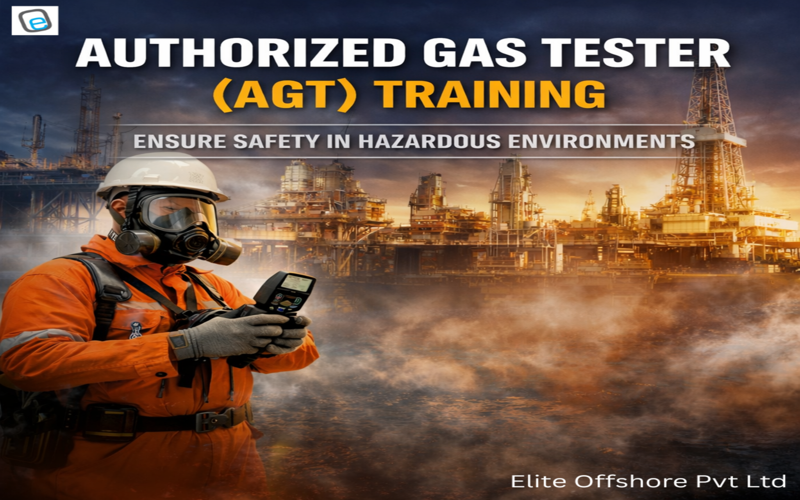
Authorized Gas Tester (AGT)
Why Authorized Gas Tester (AGT) Training Matters in Offshore and Industrial WorkIn offshore and industrial environments, safety is never optional—it’s a daily responsibility. Anyone who has worked on an oil & gas platform, inside a confined space, or around volatile substances understands how quickly conditions can change. One of the most critical roles in maintaining a safe worksite is that of an authorised gas tester (AGT).This role isn’t just about using a device and recording readings. It’s about protecting lives, preventing incidents, and ensuring that every task carried out in hazardous zones is backed by accurate gas monitoring and sound judgment.What is an Authorized Gas Tester (AGT)?An authorised gas tester is a trained professional responsible for detecting and monitoring gases in potentially dangerous environments. These include confined spaces like tanks, vessels, pipelines, and enclosed industrial areas where toxic or flammable gases may accumulate.The responsibility goes beyond testing. An AGT ensures that:The atmosphere is safe before work beginsContinuous monitoring is maintained during operationsProper documentation and communication are followedWithout proper gas safety training, even a small oversight can lead to serious incidents.Why AGT Training is Essential?Many industrial accidents are linked to poor workplace gas safety practices. Invisible gases like hydrogen sulfide or carbon monoxide don’t give warnings—you need the right skills and tools to identify them.This is where an authorised gas tester training program becomes crucial.A well-structured gas testing course helps workers:Understand different gas properties and hazardsUse gas detection equipment correctlyInterpret readings accuratelyFollow safe systems of workManage confined space entry proceduresFor anyone involved in industrial gas testing or offshore operations, these are not optional skills—they are basic requirements.About the AGT Course by Elite Offshore Pvt LtdElite Offshore Pvt Ltd offers an industry-recognized authorised gas tester course designed specifically for high-risk work environments. The course is approved by OPITO, which ensures it meets global safety and training standards.The program is delivered as an authorised gas tester online course, making it accessible for professionals who may be working rotational shifts or offshore schedules.Course Highlights:Duration: 08:00:00 HoursApproval: OPITO approvedCertification: Recognized agt certification upon completionWhat You Will LearnThe authorised gas tester e-learning course is designed to be practical and relevant. It focuses on real-world applications rather than just theory.Key learning areas include:1. Roles and ResponsibilitiesUnderstanding what is expected from an AGT in different scenarios, including legal and safety obligations.2. Gas Detection EquipmentHands-on knowledge of devices used in gas monitoring training, including calibration, usage, and maintenance.3. Gas Hazards and PropertiesDetailed insights into flammable, toxic, and oxygen-deficient atmospheres—core to hazardous gas testing.4. Confined Space EntryProcedures and precautions required before and during entry into confined environments.5. Interpreting ResultsReading gas levels accurately and making informed decisions to ensure safety.6. Documentation and ReportingRecording findings correctly, which is a critical part of gas tester qualifications.Why Choose an Online AGT Course?The authorised gas tester online course format is especially useful for offshore workers and industrial professionals who cannot attend regular classroom sessions.With Elite Offshore’s approach, you get:Flexible learning schedulesInteractive simulations for practical understandingAccess to experienced instructorsReal-world scenario-based trainingThis makes it easier to complete your gas detector certification without disrupting your work routine.Who Should Take This Course?This gas tester course is ideal for:Offshore oil & gas workersSafety officers and supervisorsMarine and shipping professionalsIndustrial workers handling confined spacesAnyone involved in gas monitoring training or safety complianceIf your job involves exposure to hazardous environments, having an authorised gas tester certification is a strong advantage—and in many cases, a requirement.The Real Value of AGT CertificationCompleting an agt certification is not just about adding a credential to your profile. It shows that you understand the importance of safety and are capable of handling critical responsibilities on-site.Companies actively look for trained professionals who can manage workplace gas safety effectively. Having this certification can:Improve job opportunitiesIncrease workplace responsibilityBuild trust within safety teamsHelp meet international compliance standardsConclusionIn industries where risk is part of the job, preparation is everything. An authorised gas tester training program equips you with the knowledge and confidence to make the right decisions when it matters most.Whether you’re already working offshore or planning to enter the field, investing in a certified gas safety training program is a practical step toward a safer and more stable career.Elite Offshore Pvt Ltd continues to provide structured, industry-focused training that helps professionals stay prepared, compliant, and safe in demanding environments.
More detailsPublished - 19 Hours Ago
Search
Popular categories
OSHA & Industrial Safety Courses
16Liberia Approved Rig Courses
6Marine and Offshore
4Offshore Oil and Gas Rig Courses
3IADC Approved - E learning
2Port & Marine Courses
1Latest blogs
Authorized Gas Tester (AGT)
19 Hours Ago

Shoulder Breadth Measurement Training
Fri, 03 Apr 2026
BOSIET Training: Requirements, Course Details, Validity & Career Benefits
Mon, 30 Mar 2026
Write a public review